


FAQ
So you know that a solar electric system will save your future energy costs, but it's a complex decision. Here are some helpful tips when evaluating a solar installation company, and evaluating whether a PV system is right for you. If you have further questions, please don't hesitate to contact us at any time.
How does a solar electric (photovoltaic) system work?
Two different types of solar electric systems can be used to generate electricity for a home or building. The first is a “grid-tied” system, which connects to your utility’s transmission lines. You can use power from the grid and produce your own at the same time. The second is a “standalone” system, which leverages power you generate and stores power into a battery system for use anytime (typically in the night hours.)
More information about a grid-tied solar system:
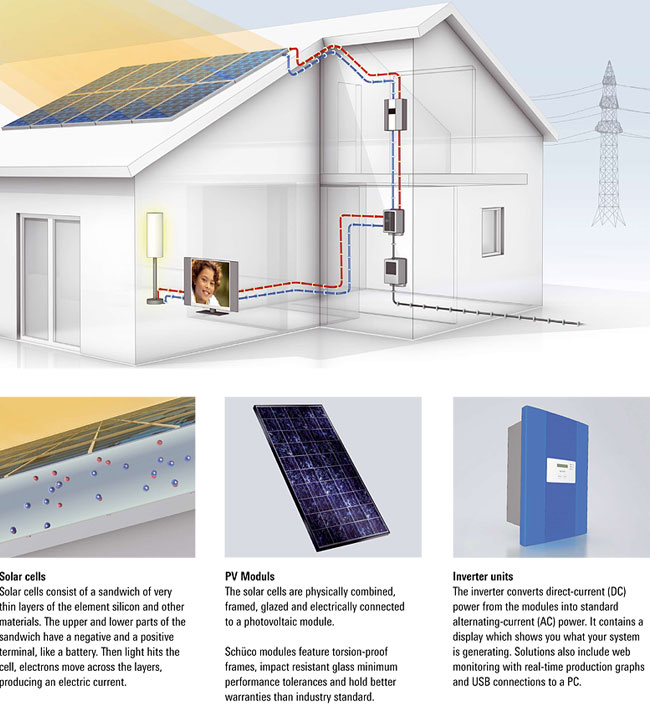
- An inverter in a building converts Direct Current (DC) Electricity into Alternating Current (AC) Electricity. The power can be used by the building it is connected to and other consumers on the power grid.
- When the demand for power in the building is low, excess photovoltaic power flows to the grid and the utility's meter turns backwards, essentially selling electricity back to the utility.
What if it's a cloudy or rainy day?
Your solar electric system will perform optimally when it is sunny, but it will often generate power during cloudy days too at a lower level. The overall kilowatt hours that we provide you with takes into account all weather factors for your area although there are differences of up to 9% year to year due to weather. With an average of over 300 sunny days per year in many areas, Northern California is fortunate to have such an optimal power source from the sun.
How does the sun power my home or business?
Solar energy, or energy naturally given off from sunlight is converted to DC (Direct Current) electricity through a solar panel array. The current is then delivered to control equipment, which in turn sends it through an inverter (which changes the DC current to AC (alternating current) to supply power to the house/business and any excess power to the utility grid.) The power can also charge batteries in the case of a battery backup system.
With a grid-connected system, excess power is “banked” with your utility company until you need more power than your array can provide or at times when there is not enough light (such as during the nighttime). In a sense, the utility acts like a battery backup system for you. It is all part of what is known as a “net metering” system. This means that your utility company will take power from you when you produce more than you use and give it back to you when you need it. You will always have power as long as the grid is up, and you can drive your bill down to near $0.
Optional equipment such as a generator, wind power, or micro hydro power can be used in a system with solar power (known as a “hybrid system”) to help offset times when the sun is not producing enough power for the current loads of the home or business.
This diagram demonstrates how power is generated through the sun.
Grid-Tied Electric Solar System